



🎯 The Main Takeaway
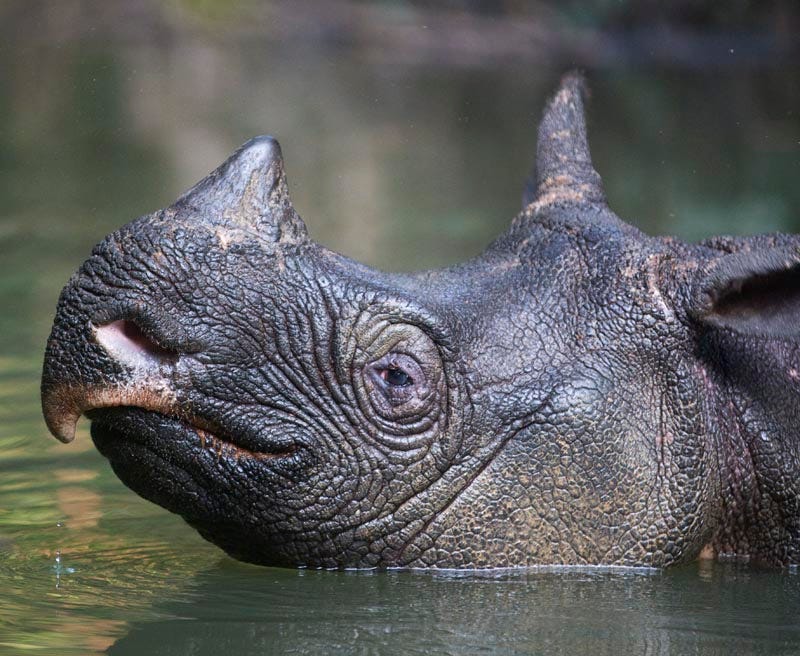
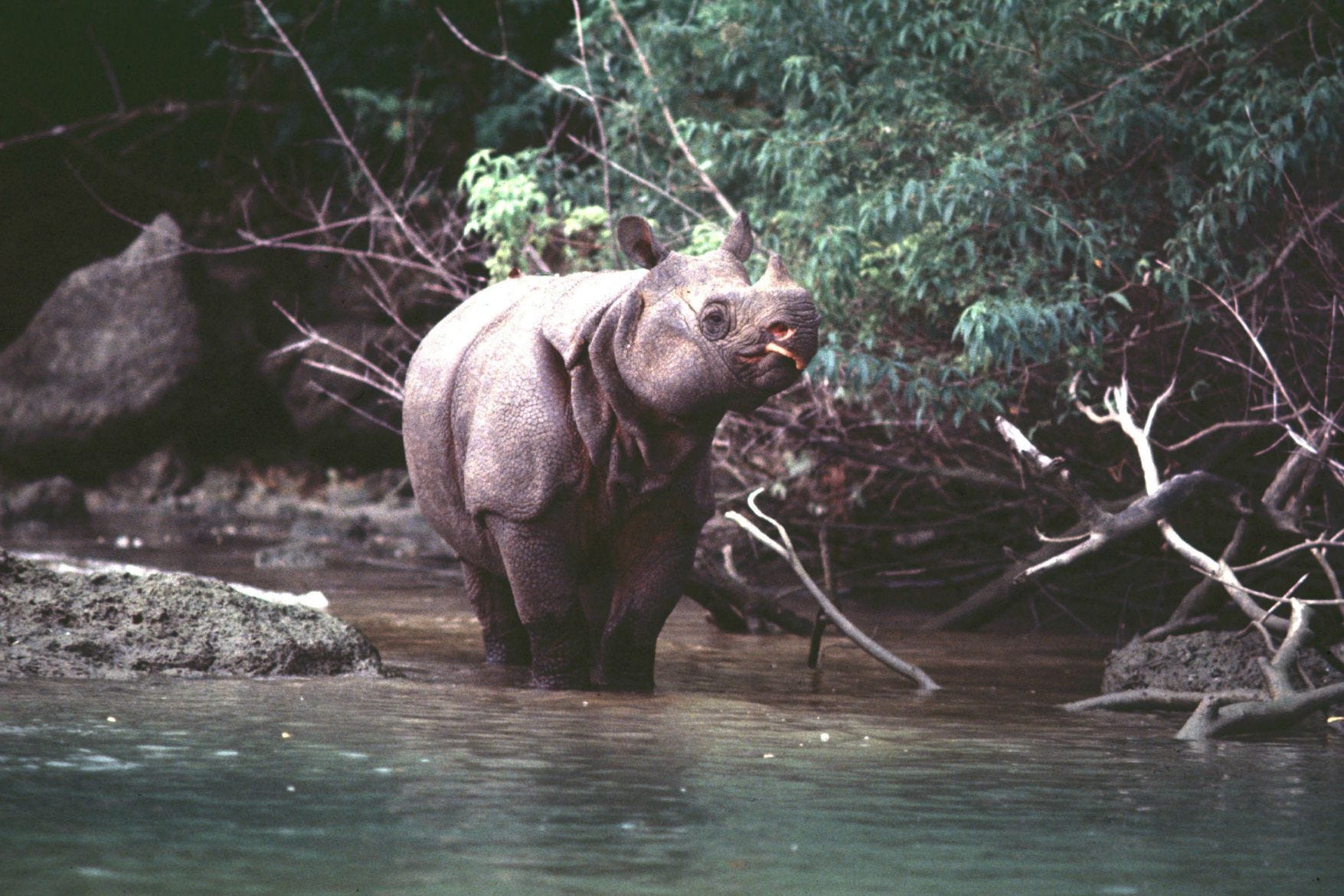
Indonesia’s government is weighing a proposal to move a small number of Javan rhinos from Ujung Kulon National Park to Alas Purwo National Park in East Java, where fewer than 100 animals survive in a single population.
Presidential envoy Hashim Djojohadikusumo raised the plan at COP31 on 12 November, citing the risk of a tsunami from Anak Krakatau.
The proposal surfaced alongside the designation of waters around Ujung Kulon as a mining business area (WUP), and environmental groups argue the two are connected.
The Forestry Ministry denies any link. The government has since said no animal will move before a full scientific assessment of Alas Purwo.
A second site is a sound conservation idea. The question is whether this one is being pursued for the reasons stated.
🔍 Why It’s on Our Radar
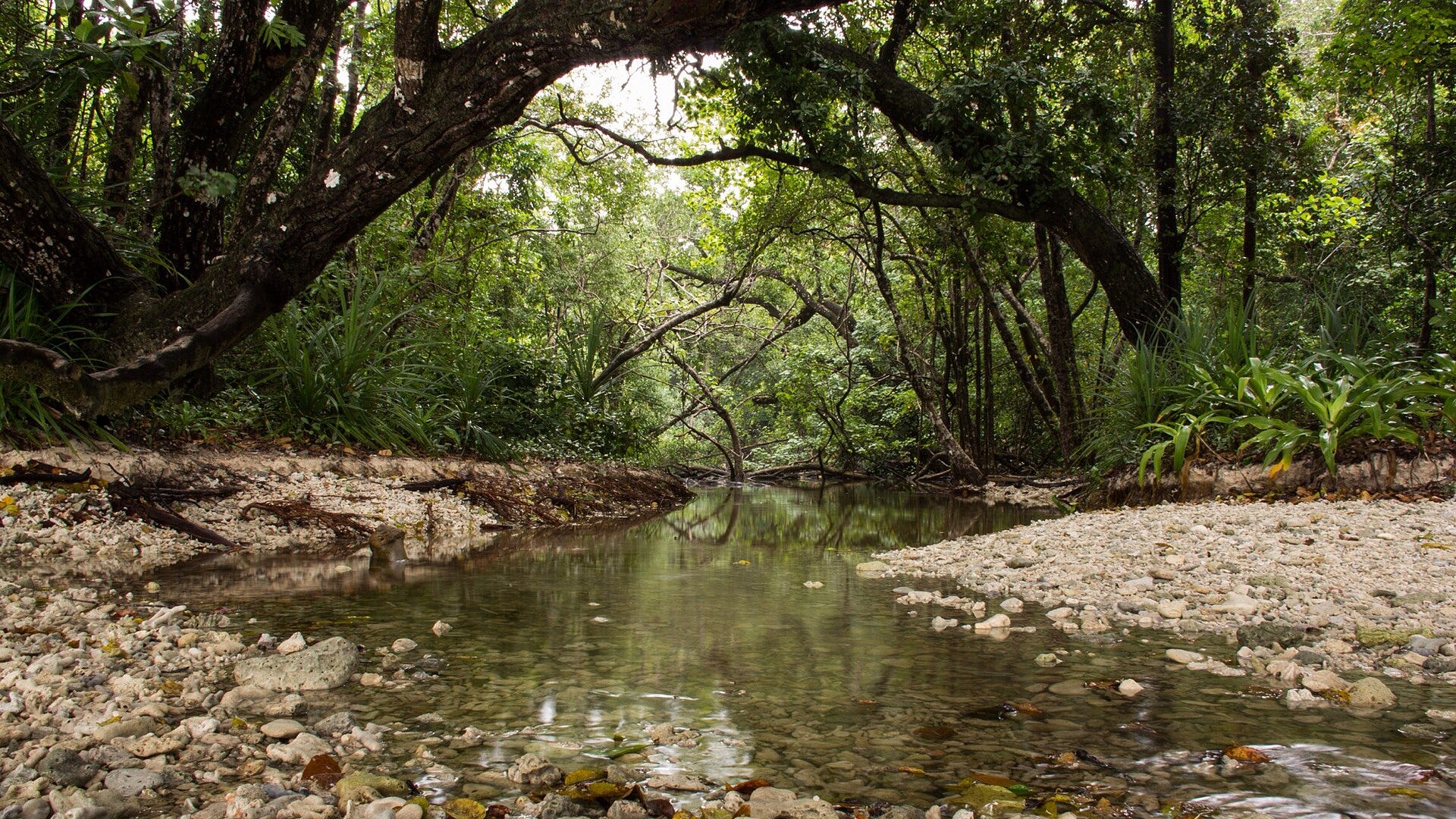
The story has moved beyond a species-protection debate into a test of how Indonesia makes conservation decisions, and whether they can be separated from extractive interests.
The sequencing is the problem.
Hashim announced the relocation idea at a climate summit, while the Ujung Kulon area was being marketed to investors and after a ministerial decision had already mapped mining zones in Banten province.
Whether a causal link exists or not, the appearance of one is now part of the story, and the government has not addressed it with a published risk assessment.
The contradiction to watch is between the disaster rationale and the historical record. Javan rhinos survived the 1883 Krakatau eruption and the tsunami that followed; a 2010 study found no evidence the Ujung Kulon population was wiped out by that event. That does not mean the next disaster is safe. It does mean the threat case needs modelling, not assertion, and that modelling has not been released.
🇮🇩 What Jakarta has proposed and what it has not
The relocation plan is not new.
Officials say they explored a second habitat in the 1980s, with Gunung Honje and Cikepuh among the sites considered.
Alas Purwo is now the focus because it sits within the species’ historical range.
Muhamad Hidayat, a senior adviser at the communications agency (Bakom), says any move requires proof of year-round food, water, wallowing sites, roaming space and security, plus assessments of conflict with local communities and competition with banteng.
No such assessment has been published.
The Forestry Ministry says the idea has not been translated into a technical plan, a site determination, an individual count, a method or a timetable.
⛏️ The mining question
Tirto’s reporting places the relocation discourse directly against the WUP designation for waters around Ujung Kulon. The article does not assert a proven motive; it documents the overlap in timing and asks what it means.
WALHI, the Indonesian environmental forum, has been more direct. Its forest campaigner Umi Ma’rufah, as cited by Tirto, said the group is examining a suspected link between the relocation proposal and gold-mining potential in Ujung Kulon that has been blocked by the park’s protected status.
WALHI also argues the disaster rationale is weakly supported by evidence, given the species’ survival through 1883.
The Forestry Ministry rejects the connection. Spokesman Ristianto Pribadi said the second-habitat idea is “purely” about conservation and disaster mitigation, and that Ujung Kulon’s protected status will not change. The energy ministry has separately said the national park itself is not inside a mining area.
Both things can be true: the park can be legally excluded from mining, and the waters around it can be designated for mining, while a relocation proposal creates pressure on the land boundary.
The absence of a published environmental impact assessment for the WUP is the gap that keeps the suspicion alive.
🦏 The record on moving rhinos
Indonesia’s first Javan rhino translocation ended in death.
In December 2025, a male rhino named Musofa was moved into a conservation facility within Ujung Kulon, a short journey compared with a transfer across Java. He died days later.
A necropsy reportedly found chronic parasitic infection, but the operational lesson is that capture and transport can turn a survivable condition into a fatal one.
The regional record points the same way.
India’s Rhino Vision 2020 succeeded at Manas because it restored habitat, rebuilt security, and secured community support before release.
Nepal moved rhinos in the 1980s to avoid a single-site catastrophe.
Indonesia’s own orangutan translocations, by contrast, were found counterproductive in a study of roughly 1,000 moves: close to one in three animals tried to return to their capture sites.
🏞️ Three unanswered questions for Alas Purwo
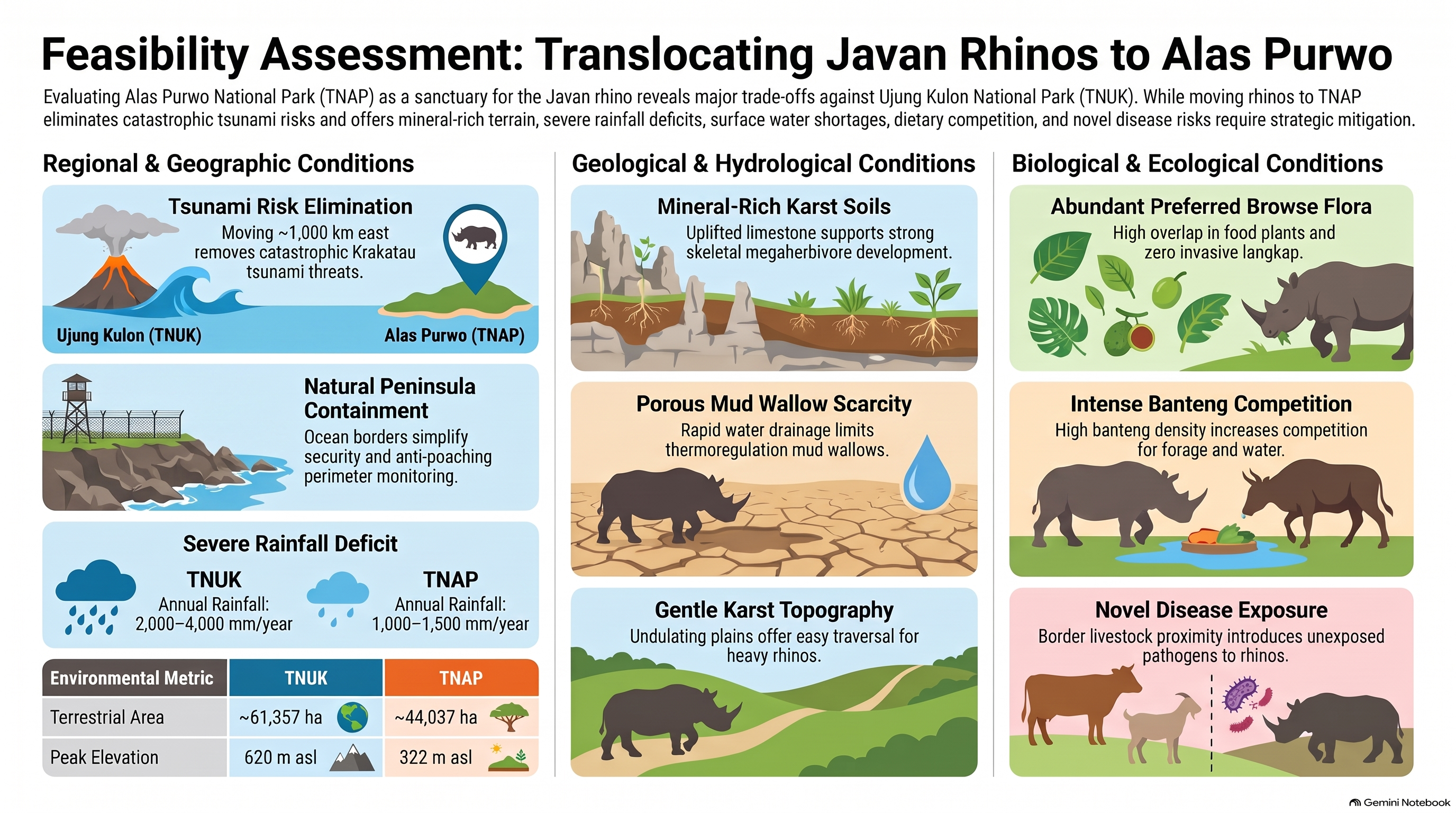
First, water. Alas Purwo is a karst landscape; Ujung Kulon is volcanic with reliable surface water. Rhinos need wallows. No hydrological assessment for Alas Purwo has been made public.
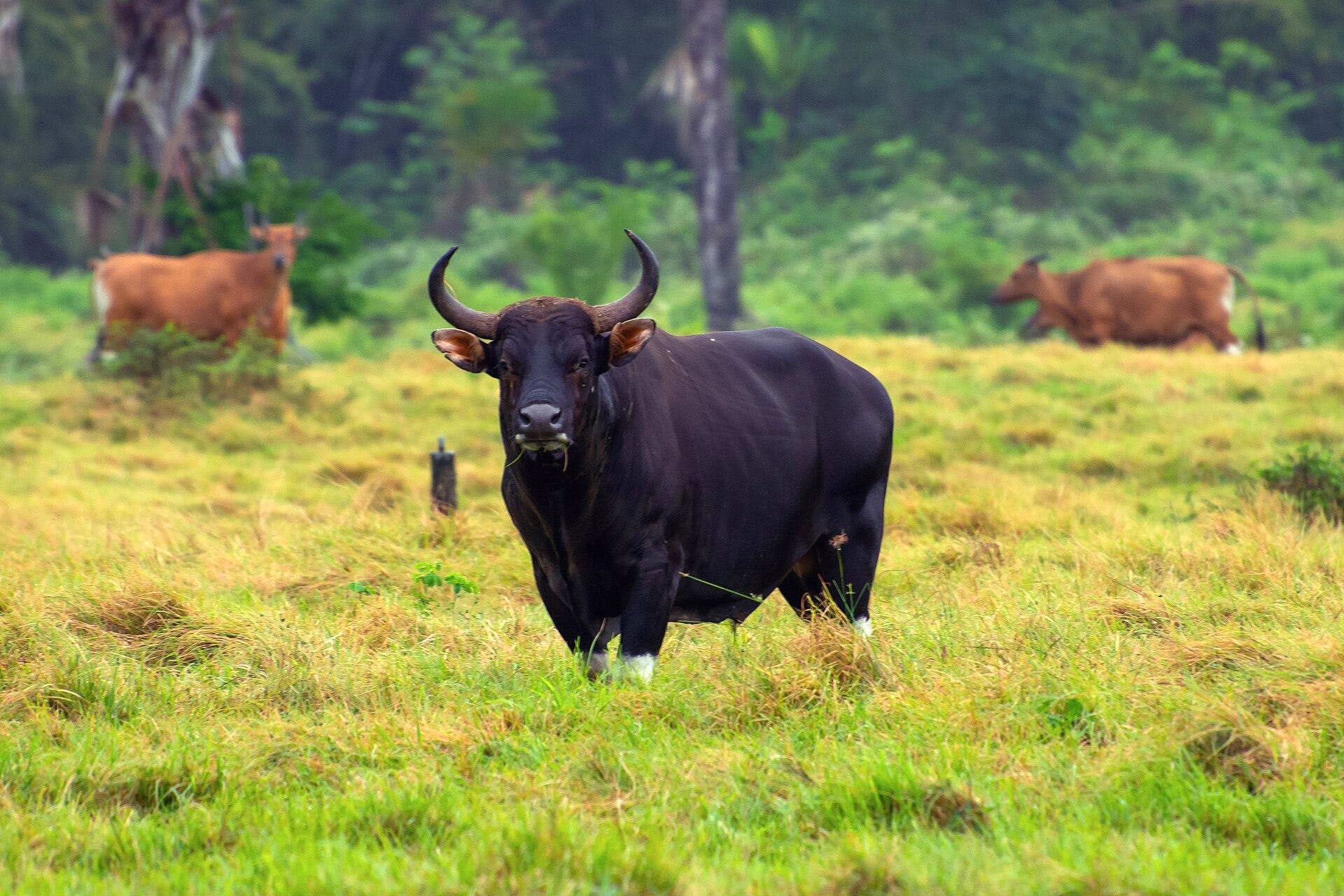
Second, competition and disease. Alas Purwo holds banteng, and introducing a naive rhino population carries pathogen risk in both directions.
Third, the alternative. If food availability in Ujung Kulon is declining, the in-situ option is to restore the food web in place, manage banteng pressure, and address encroachment. That option has received far less attention than the relocation plan.
🌏 The Regional Stakes
Indonesia is not the only Southeast Asian country where translocation has become the default response to a land-use problem. The regional ledger is mixed, and the Javan rhino case will either reinforce or interrupt the pattern.
🇰🇭 🐂 Cambodia’s banteng operation in early 2026 shows what a well-resourced translocation looks like, and what it costs. Conservationists deployed helicopters, trucks and more than 50 personnel to move 16 critically endangered banteng into Siem Pang Wildlife Sanctuary, bringing the reserve’s total to 32 animals. The operation was rescue-driven: the source herd faced imminent forest conversion to farmland and active poaching. A conservationist with Rising Phoenix said the site had “proper law enforcement, no poaching and suitable habitat” — the conditions that make a move viable.
🇰🇭 🐅 India’s agreement with Cambodia to reintroduce tigers shows the opposite lesson. The two governments signed an MoU focused on tiger reintroduction, with officials emphasising technical collaboration and knowledge transfer before any decision on translocation. The target date has since slipped from 2025 to 2028 after a review found the prey base in the proposed Cambodian habitat below the level needed to sustain a tiger population. The delay is the system working: an assessment found the ecosystem was not ready, and the timetable moved rather than the animals.
🇲🇾 🐘 Malaysia has moved elephants for years while human–elephant conflict has persisted, with reported losses running into tens of millions of ringgit. Conservation groups argue relocation has become a routine response rather than a remedy.
The pattern is consistent. Translocation succeeds when it is the final step in a chain of preparation — habitat, security, prey base, community consent — and fails when it is used to bypass those requirements.
If a Javan rhino move proceeds on a weak evidence base, it sets a permissive precedent: announce the relocation, defer the science, and let the political commitment outrun the assessment. If it proceeds after a published, independently reviewed site assessment, it becomes a regional template—and one other governments will be asked to match.
📌 The Bottom Line
A second Javan rhino population is a genuine conservation need, and Alas Purwo may eventually be the right place for it.
But the case for moving the animals has been weakened by how it was made: announced at a climate summit, overlapping with a mining designation, and without a published risk assessment for either the disaster threat or the receiving site.
The government says it will not move a rhino until the science is complete. The test is whether that science is published before a date is set, and whether it answers the mining question as directly as it answers the habitat question.
Need More Angle?
Asian News Network Calls grow for Malaysian government to rethink handling wildlife beyond translocation
Colossal Foundation Rescuing Cambodia’s Last Banteng and Relocating Them to Siem Pang Wildlife Sanctuary
Conversation, The Animals are often moved to make way for infrastructure, but we don’t know what happens to them next
Jakarta Post, The Government tempers Hashim’s Javan rhino relocation plan
Kompas Examining the Track Record of Rare Animal Relocation in Other Countries, from Rhinos to Tigers
Kompas Javan Rhinos from Ujung Kulon to Alas Purwo: Saving or Adding Risk?
Michael T. Mengak Wildlife Translocation
Mongabay Indonesia’s 1st Javan rhino translocation ends in death, in conservation setback
Mongabay Helicopter translocation brings isolated banteng to safer grounds in Cambodia
South China Morning Post Why a bid to save Indonesia’s last 50 Javan rhinos has sparked fierce pushback
Tirto Aroma Tambang di Balik Wacana Relokasi Badak Jawa Ujung Kulon
(ELS/QOB)